
Movie Review - Three Thousand Years of Longing
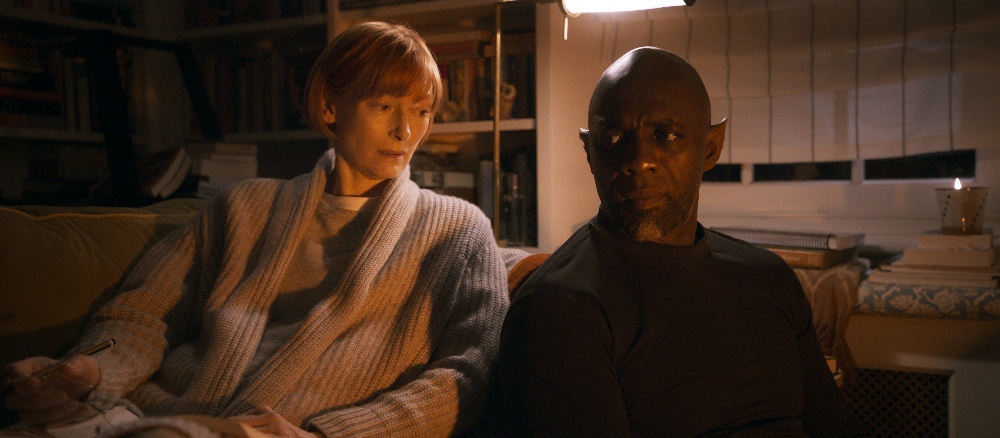 Tilda Swinton stars as Alithea Binnie and Idris Elba as The Djinn in director George Miller’s film
THREE THOUSAND YEARS OF LONGING
A Metro Goldwyn Mayer Pictures film
Photo credit: Courtesy of Metro Goldwyn Mayer Pictures Inc.
© 2022 Metro-Goldwyn-Mayer Pictures Inc. All Rights Reserved
This might be George Millers' best work. And that's saying a lot. Of course, it's not as frenetic as anything from the Mad Max universe, but you can see his fingerprints all over every scene. The cinemaphotography is brilliant. You can see the care and artistry applied to every scene. For example, when we first see Sheba's face she is unquestionably a beautiful woman, but the lighting applied to her face is pure art.
The writing, also by George Miller, is a paragon of the craft. You can tell that every word, every comma, was deliberate. There was nothing lacking, nor nothing extraneous.
And finally, the acting. This is very nearly a two-person story. In fact, this story would make an amazing play with a cast of only two characters. The casting of Tilda Swinton and Edris Elba is perfect. There really aren't two actors who could be better in these roles.
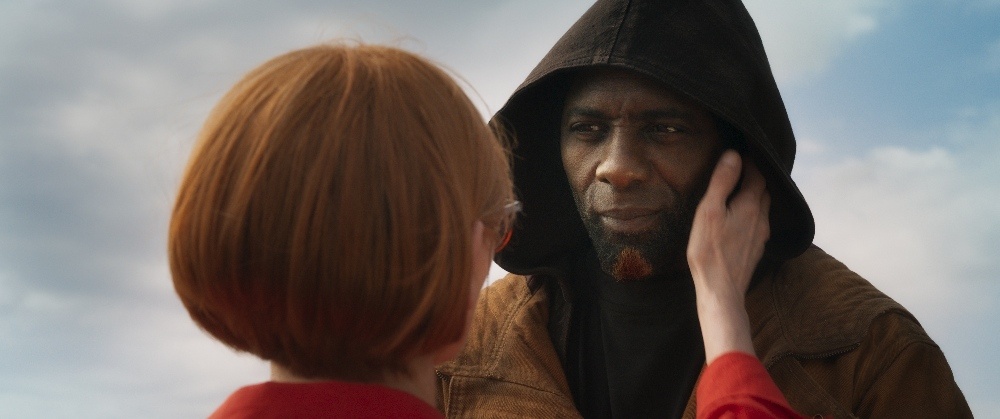
The only reason I'm not giving this movie an A+ is that the story doesn't end with an impact—which I'm glad for. It doesn't try to be more than it is and swing for the fence, as too many movies attempt, but fall short. It ends comfortably; without disappointment, but also without inspiration. It does however end with admiration for the quality of a wonderfully told story.
Grade: A
| Rated: | (R) Brief Violence | Some Sexual Content | Graphic Nudity |
| Genres: | Drama, Fantasy, Romance |
| Starring: | Tilda Swinton, Idris Elba, Pia Thunderbolt |
| Director: | George Miller |
| Writer(s): | George Miller, Augusta Gore, A.S. Byatt |
| Language: | English |
| Country: | Australia, United States |
Plot A lonely scholar, on a trip to Istanbul, discovers a Djinn who offers her three wishes in exchange for his freedom.
Comments
No comments yet — be the first.